

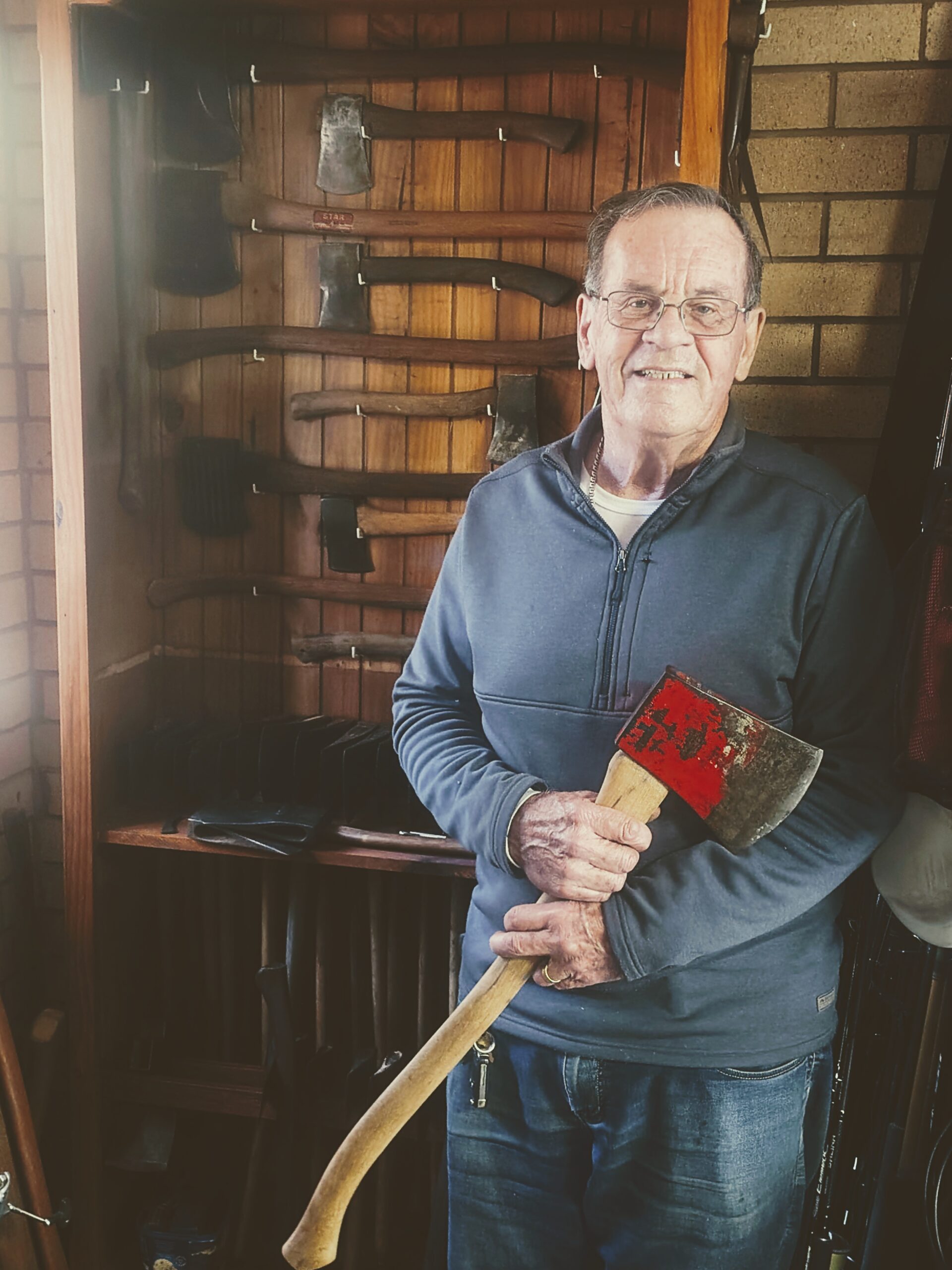
Sometimes you head out to buy an axe. Sometimes you come home with a head full of stories, a notebook full of history and the uncomfortable realisation that other people suffer from the same axe addiction you do.
One of the things I enjoy most about Forgotten Steel isn’t actually the axes.
It’s the people.
A few months ago, I put a Marketplace ad online looking for old axes and tools. Before long, I received a message from a gentleman named Ron. He sent through photos of three axe heads he had available, and one immediately caught my attention—an unmarked Tasmanian pattern head with plenty of promise.
The problem was distance.
I couldn’t get down to see him at the time, so my sister, who lived closer, kindly picked the head up for me with the promise that I’d come down myself one day and have a proper look through the rest of his collection.
As often happens, life got busy.
Weeks became months, and the visit kept slipping down the list until one afternoon I finally sent Ron another message asking whether he still had any axes available. Back came a photo of a lovely paper-label Trojan and a small Hytest Craftsman hatchet that immediately looked like it might become the perfect axe for one of the boys.
I set off expecting a quick look through a few axes, a short chat, and then home in time for dinner.
I should know better by now.
THE DRIVE SOUTH
The trip was about an hour each way, and I spent most of the drive thinking about the little Hytest Hatchet.
What I wasn’t expecting was to spend the next hour and fifteen minutes standing in Ron’s shed talking almost continuously about Australian axe history.
The moment I arrived, it became obvious that Ron wasn’t simply someone with a few old tools lying around.
He was a collector.
The dangerous kind.
The kind who can tell you why one stamp is earlier than another, who remembers where a particular axe came from, and who disappears halfway through a conversation because he’s just remembered another interesting one tucked away somewhere.
In other words, exactly the sort of person I enjoy meeting.
THE AXES KEEP APPEARING
What started as a look at two axes quickly turned into a tour.
Ron would pull one axe down, tell its story, then reach for another. Before long I was holding heads from makers I’d barely encountered before and hearing about production changes I didn’t know existed. Every few minutes there seemed to be another lesson.
Then came the real surprise.
Ron showed me a particularly unusual 1946 Hytest transition model, and I realised I was looking at a piece of Australian axe history I’d never even heard of. As he explained the features that made it a transition model, I found myself mentally filing away another rabbit hole to disappear down later.
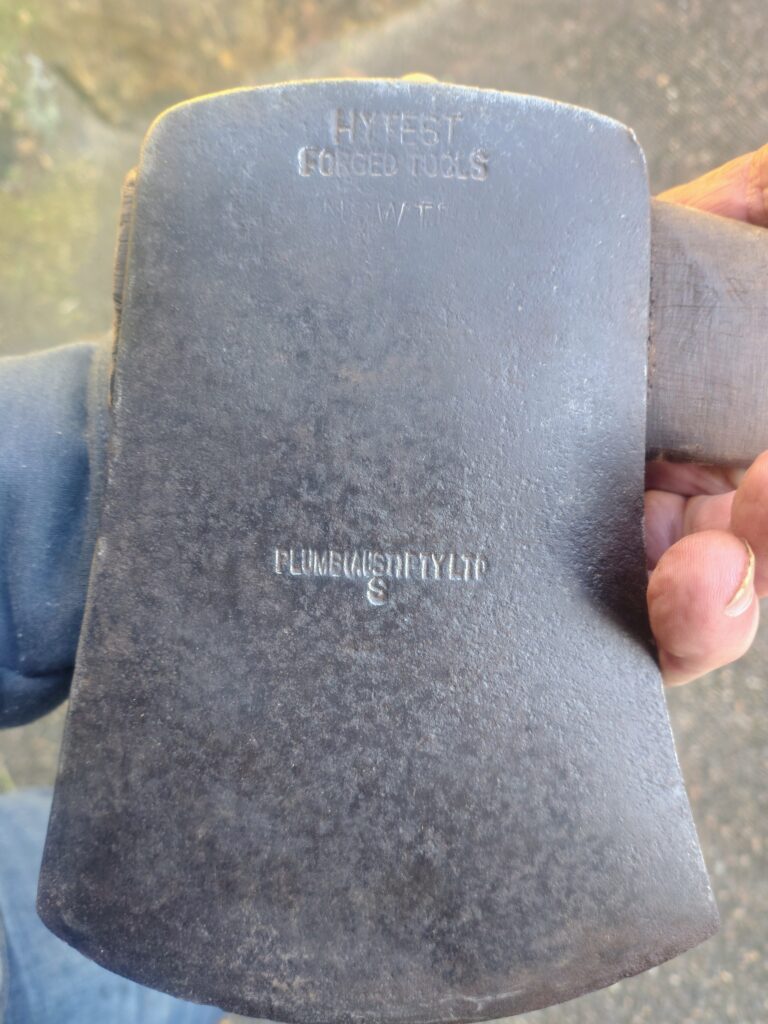
That’s one of the joys of this hobby.
Just when you think you’ve learned most of the major Australian makers, someone opens a shed door and reminds you how much you still don’t know.
MORE THAN A TRANSACTION
What struck me most was that the afternoon never really felt like a sale.
It felt like two blokes standing in a workshop talking about tools they both genuinely love.
We discussed stamp variations, paint colours, handle shapes, production periods and the oddities that turn up after decades of farm use. Ron shared stories about where certain axes had come from, which ones he’d searched for, and which ones he was never letting go.
At one point I realised he was hesitating before handing over a particular axe.
That’s when it dawned on me.
Ron has exactly the same problem I do.
We both like finding axes considerably more than we like parting with them.
Collectors understand that feeling immediately. You tell yourself you’re selling one to make room for another, then spend the next week glancing at the empty spot on the wall wondering whether you made a mistake.
Apparently it’s a widespread condition.
THE LITTLE HYTEST
Among all the larger and more unusual axes, the little Hytest Craftsman hatchet kept drawing my attention. I could already picture one of the boys using it around camp or helping split kindling beside the fire.
Those are often my favourite finds—the tools that will actually be used by the next generation rather than simply admired.
An old axe becomes far more interesting once a child learns to sharpen it, care for it and use it safely.
That’s how these tools survive.
Not by being locked away, but by being passed on.
THE DRIVE HOME
Eventually I glanced at the time and realised my quick visit had stretched well beyond the original plan. Ron and I were still talking as I gathered the axes to load into the car, and I left with far more than I’d expected when I set off that afternoon.
A couple of axes, certainly.
But also a handful of new maker names to research, notes about a 1946 Hytest transition model, and another reminder that the Australian axe collecting community is full of generous people willing to share what they know.
The drive home felt shorter.
Perhaps because my mind was already replaying everything I’d seen.
WHY I KEEP DOING THIS
People sometimes ask why I spend so much time chasing old axes.
Days like this are the answer.
Yes, finding a good axe is exciting. But the real reward is meeting people like Ron, hearing the stories behind the tools, learning something new, and realising that these old pieces of steel connect complete strangers through a shared appreciation for craftsmanship and history.
An axe might be what gets you through the gate.
The conversation is usually what makes the trip worthwhile.
And judging by the grin on my face when I got home, I’d say this particular trip was worth every kilometre.
Restore it. Use it. Pass it on.