


Sometimes the most interesting restorations aren’t the tools that fit in your hand. They’re the ones that built the buildings still standing around us.
There are certain tools that stop people in their tracks the moment they walk into the workshop. This vintage Millers Falls Barn Beam Boring Machine is one of them.
Most people under the age of forty have never seen one before, let alone watched one in action. Yet before portable electric drills and battery-powered tools became commonplace, machines like this were an essential part of timber framing throughout North America. Barns, bridges, mills and heavy timber homes were built one hole at a time using these ingenious machines.
I’d wanted one for years.
The problem was finding one.
After months of searching, it became obvious that examples in Australia are extremely scarce. In the end, I sourced this machine from the United States and had it shipped halfway around the world to its new home in the Forgotten Steel workshop.
Sometimes the hunt is almost as rewarding as the restoration itself.
THE FIND
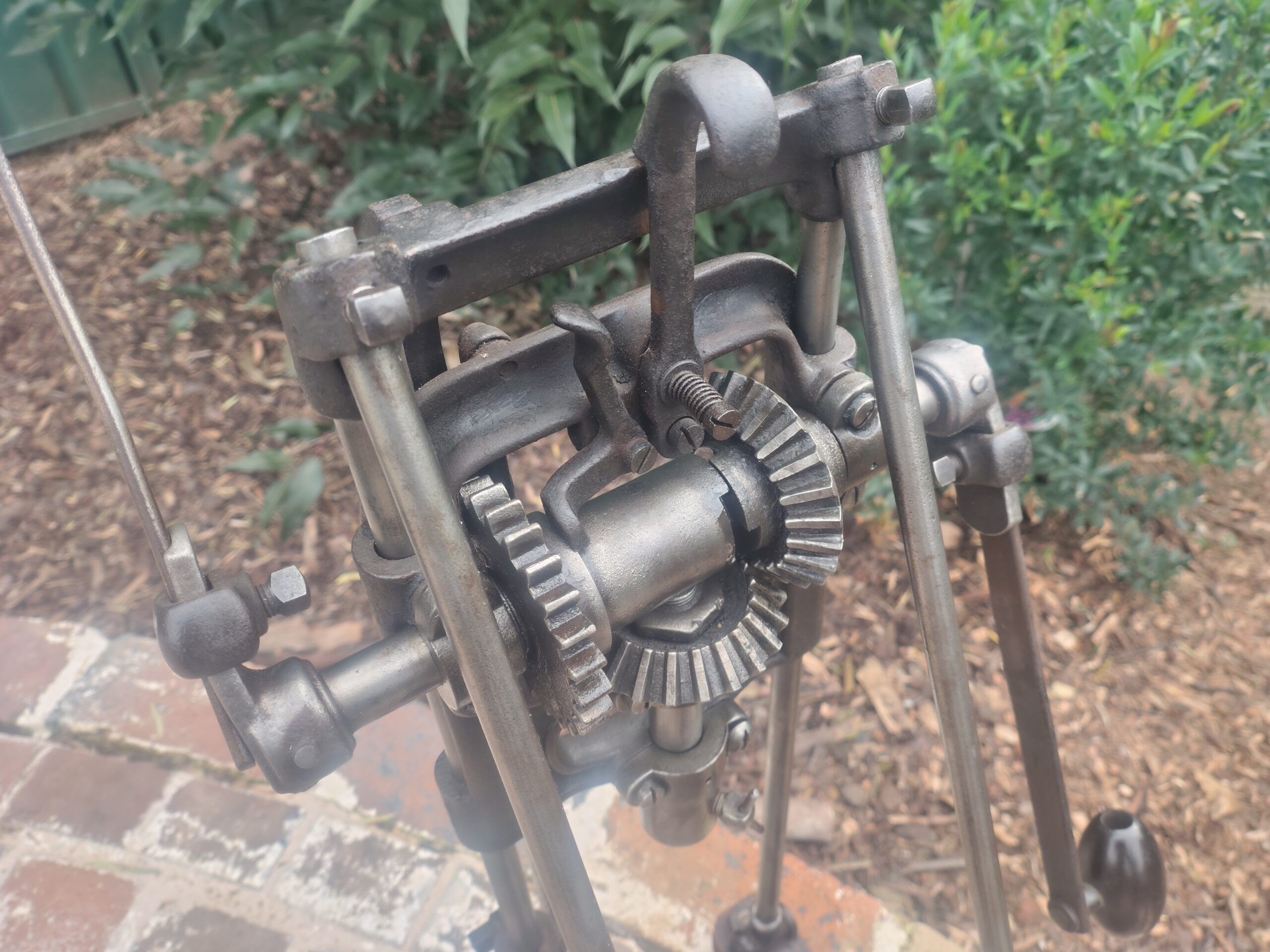
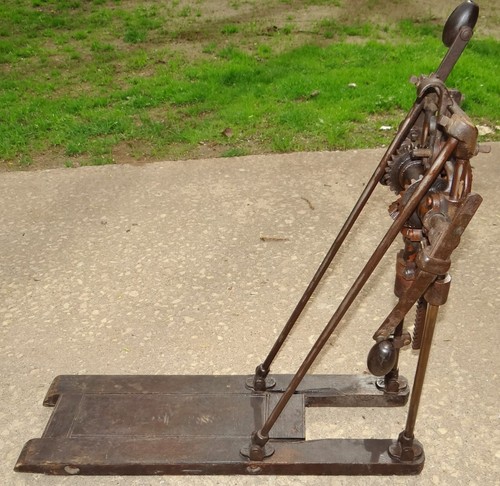
This machine arrived complete and remarkably original considering its age. The castings were intact, the gearing was complete, and all of the major components were present—something that’s becoming increasingly uncommon as many have been stripped for parts over the years.
Like most old workshop machinery, it wore decades of dust, surface corrosion and dried grease. Thankfully, there was no serious damage, only the honest wear you’d expect from a tool that had spent a lifetime doing exactly what it was designed to do.
From the moment I unpacked it, I knew this wasn’t going to be a full rebuild.
The goal was preservation.
A LITTLE HISTORY
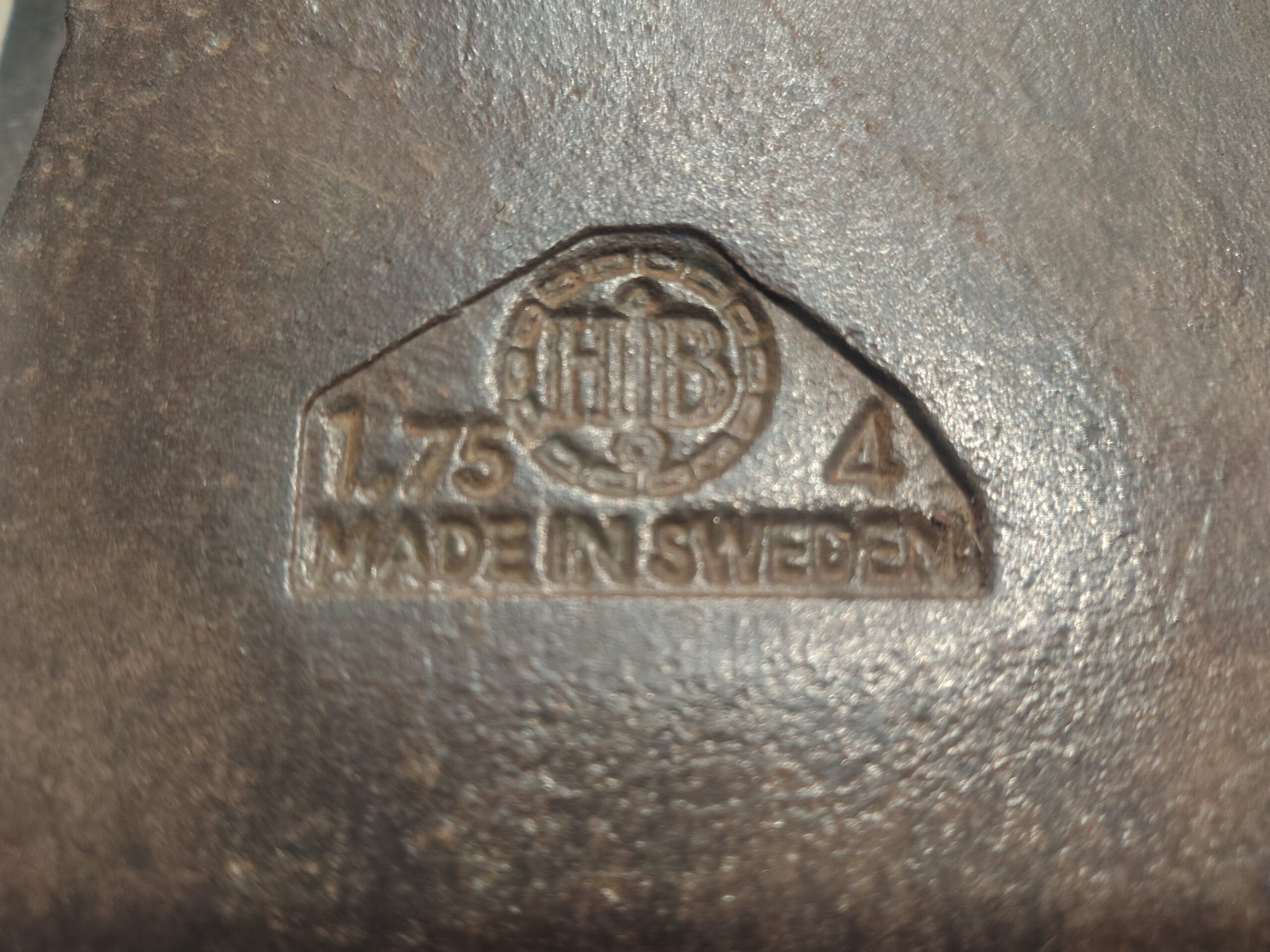
Millers Falls was established in Massachusetts during the nineteenth century and went on to become one of America’s best-known manufacturers of hand tools. While many people recognise the company for its braces, hand drills, planes and measuring tools, their heavy-duty boring machines occupy a special place in woodworking history.
Before electricity transformed building sites, timber framers relied on machines like these to bore large, accurate holes through massive beams. Mounted directly onto the timber using adjustable feet, the operator turned the large drive handle while the reduction gearing multiplied torque, allowing surprisingly large auger bits to pass through hardwood with relative ease.
It’s an elegant piece of engineering.
No batteries.
No extension leads.
Just cast iron, steel gears, leverage and a bit of elbow grease.
Many of the barns and timber-framed buildings built using machines like this are still standing well over a century later—a quiet reminder that good tools, when looked after, often outlive their original owners.

INITIAL ASSESSMENT
Mechanically, the machine was in far better condition than I’d hoped.
The gears turned smoothly with very little wear, the crank mechanism remained tight, and the feed mechanism operated exactly as intended. That alone made the restoration worthwhile.
The cast iron simply needed careful cleaning to remove surface oxidation while preserving the original machining marks and aged patina. Rather than polishing everything until it looked factory fresh, I wanted the machine to retain its history.
The timber base was another story.
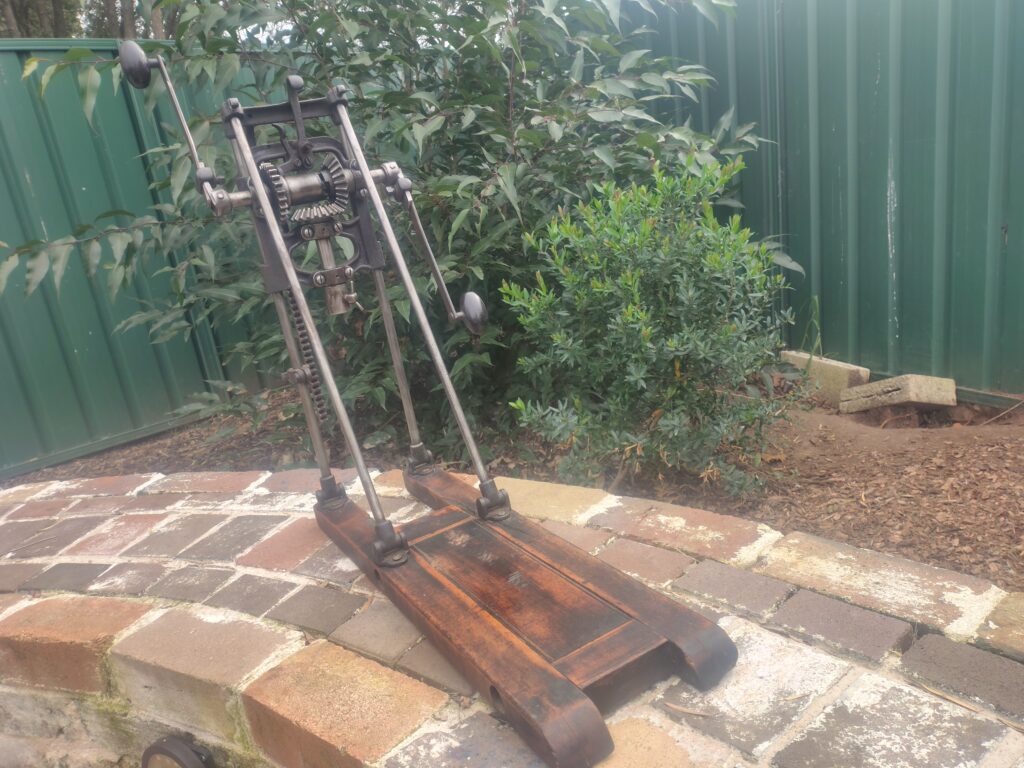
Years of workshop grime had dulled the surface, but underneath was beautiful old hardwood waiting to be revealed. After careful preparation, it was refinished to bring back the warmth of the timber without making it look new.
Like many Forgotten Steel restorations, the aim wasn’t perfection.
It was respect.
THE RESTORATION
The restoration focused on conservation rather than replacement.
Every component was stripped, cleaned and inspected before being reassembled with fresh lubrication. The cast iron was protected while preserving the honest character earned through decades of use, and the timber base was carefully refinished to complement the machine without stealing attention from it.
Seeing the mechanism operate smoothly again is deeply satisfying. The large bevel gears mesh with a reassuring mechanical precision, the feed screw advances exactly as it should, and the entire machine feels every bit as solid as the day it left the Millers Falls factory.
There is a quiet confidence about tools from this era.
Nothing feels flimsy.
Nothing feels disposable.
Every part exists for a reason.
WHAT’S NEXT?
Although fully restored, I have no intention of turning this into a museum display. In fact, I already have used this to build my carpenters bench which I will detail in another post.
My plan is to fit it with the correct auger bits and put it back to work boring holes through heavy timber, just as it was designed to do.
There is something fitting about that.
After travelling from America to Australia and surviving who knows how many decades, it deserves to hear wood shavings falling to the floor once again.
That’s what Forgotten Steel is all about.
Not simply collecting old tools.
Making sure they continue doing the jobs they were built for.