


Sometimes an axe doesn’t need saving. It just needs finishing the way you always wished the factory had.
Not every axe that lands on the Forgotten Steel workbench has spent decades buried beneath rust in the corner of a shed. Every now and then one comes along that has simply waited patiently for someone to appreciate it.
This Cyclone splitting axe is one of those.
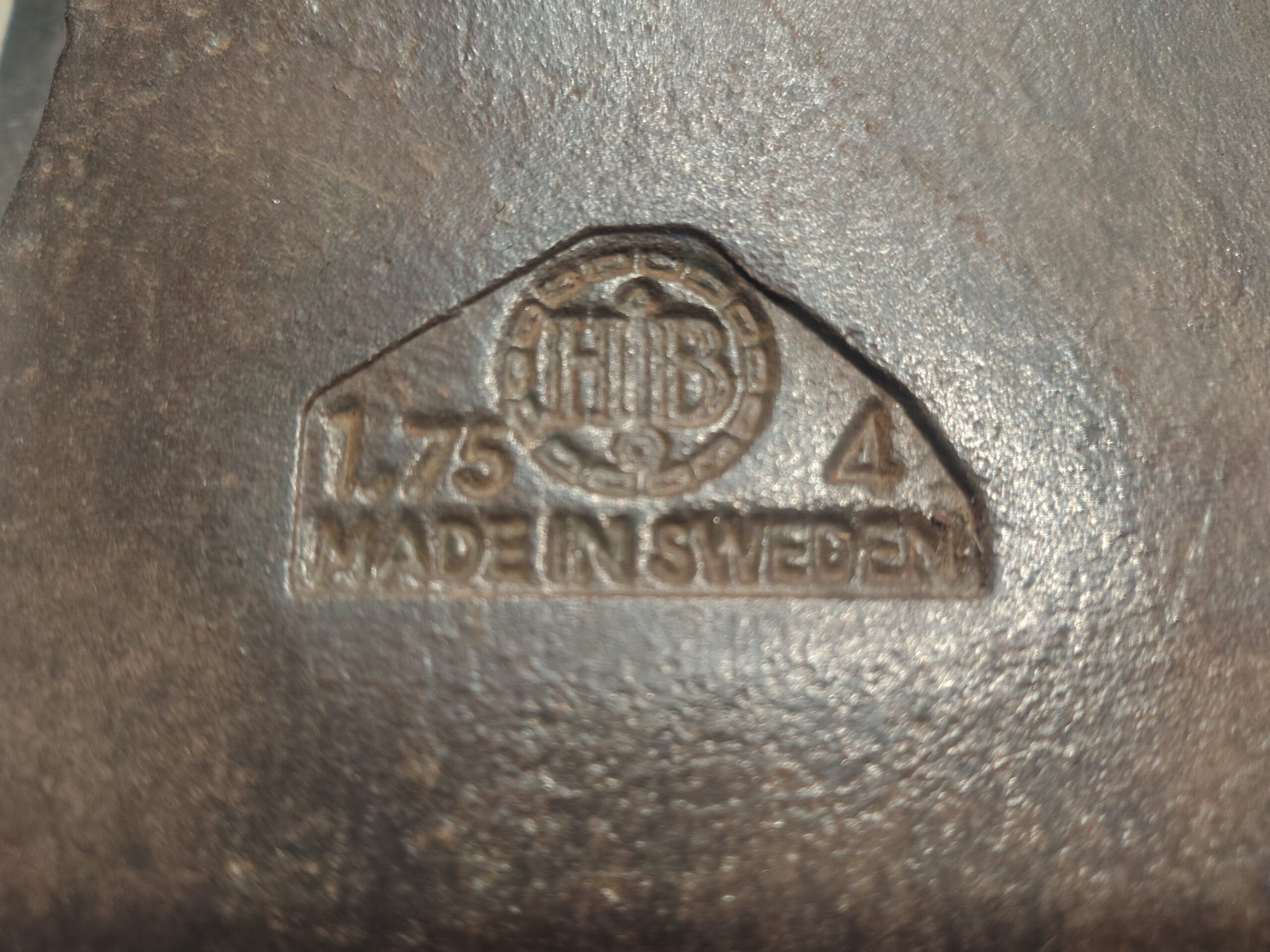
When I bought it, the previous owner told me he’d purchased it sometime in the early 1990s. He’d used it just once before deciding it was simply too large and heavy for his liking. Amazingly, the original stickers were still attached to both the head and the handle when it came into my possession.
At around 2.35kg, it’s certainly no lightweight. Combined with its extra-long handle, this is an axe built for one purpose—splitting timber efficiently.
After spending some time with it myself, I’d say the original owner wasn’t wrong.
It’s a big axe.
Fortunately for me, I’m quite happy with big axes.
THE FIND
Unlike many of the older axes featured on Forgotten Steel, this one didn’t need rescuing from neglect. It had simply spent most of its life sitting quietly, waiting for someone who appreciated a longer handle and a little extra weight.
The first thing I noticed was the balance. Despite its size, the long handle gives the axe a smooth, controlled swing that feels surprisingly natural. For splitting duties, it’s exactly the sort of tool I enjoy using.
It wasn’t purchased because it was rare.
It was purchased because I knew it had the potential to become an exceptional user.
INITIAL ASSESSMENT
The head was in outstanding condition with virtually no wear to speak of. There were no significant chips, no abuse to the poll and very little evidence that it had ever seen regular work.
Mechanically, there was very little that actually needed restoring.
Cosmetically, however, I had a different vision.
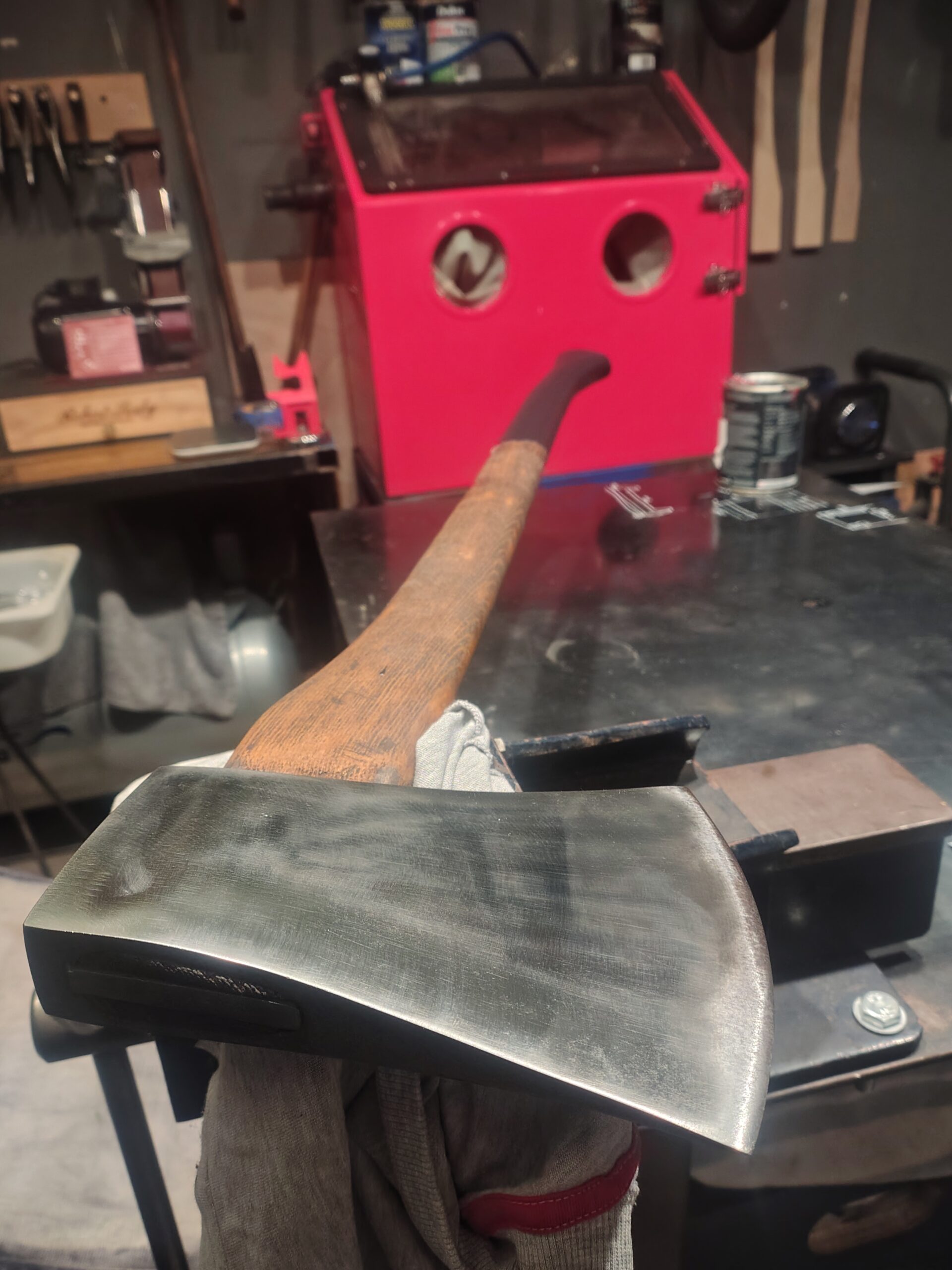
The factory finish has been removed and the steel has currently been taken back to 320 grit, with the plan to continue through to around 800 grit before putting the final edge on. Rather than chasing a mirror polish, I’m aiming for a clean satin finish that suits the working nature of the axe while still showing off the quality of the steel.
The handle has also received some attention. After carefully preparing the timber, I applied a custom stain to give it a richer, more traditional appearance before treating it with several coats of Forgotten Steel Workshop Oil. Once the restoration is complete, it will receive a final coating of Forgotten Steel Workshop Wax to seal and protect the timber.
One of the changes I’m most pleased with is the handle finish.
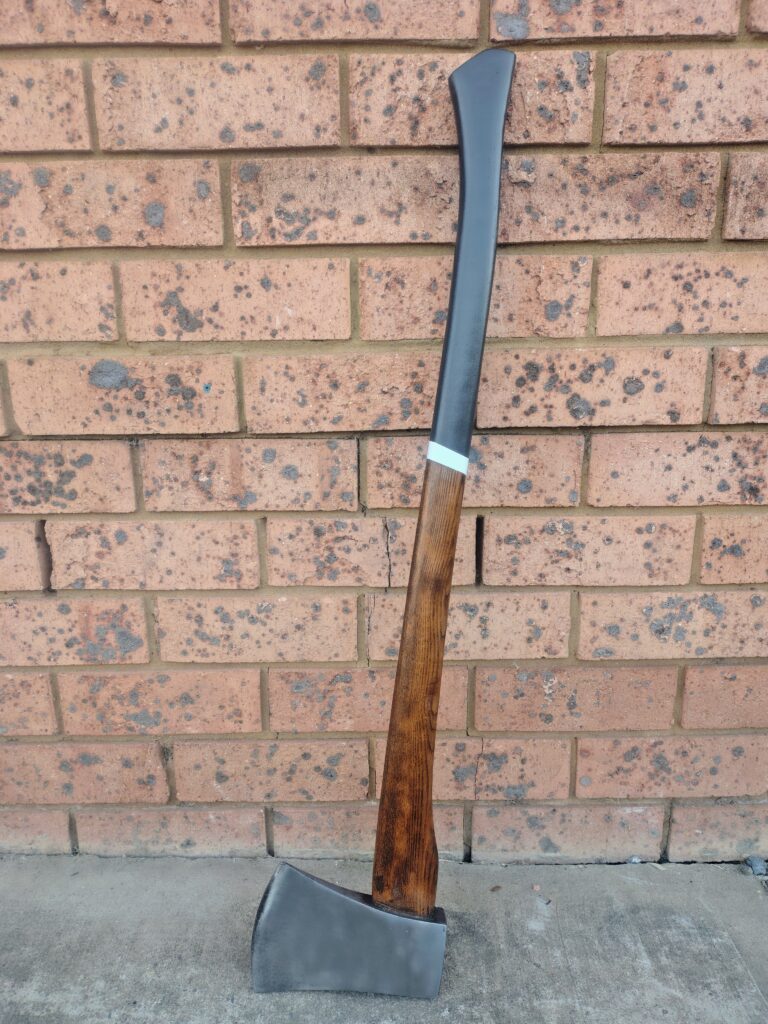
Rather than leaving it plain timber, I’ve applied three coats of a custom satin black epoxy finish to just under half the handle length, allowing a full 24 hours drying time between each coat. The result is a tough, understated finish that contrasts beautifully with the warm timber on the rest of the handle and the polished cutting edge that is beginning to emerge.
It’s a subtle transformation.
The sort of change that makes people wonder why the axe somehow looks better without immediately realising what’s different.
SHARPENING & FINISHING
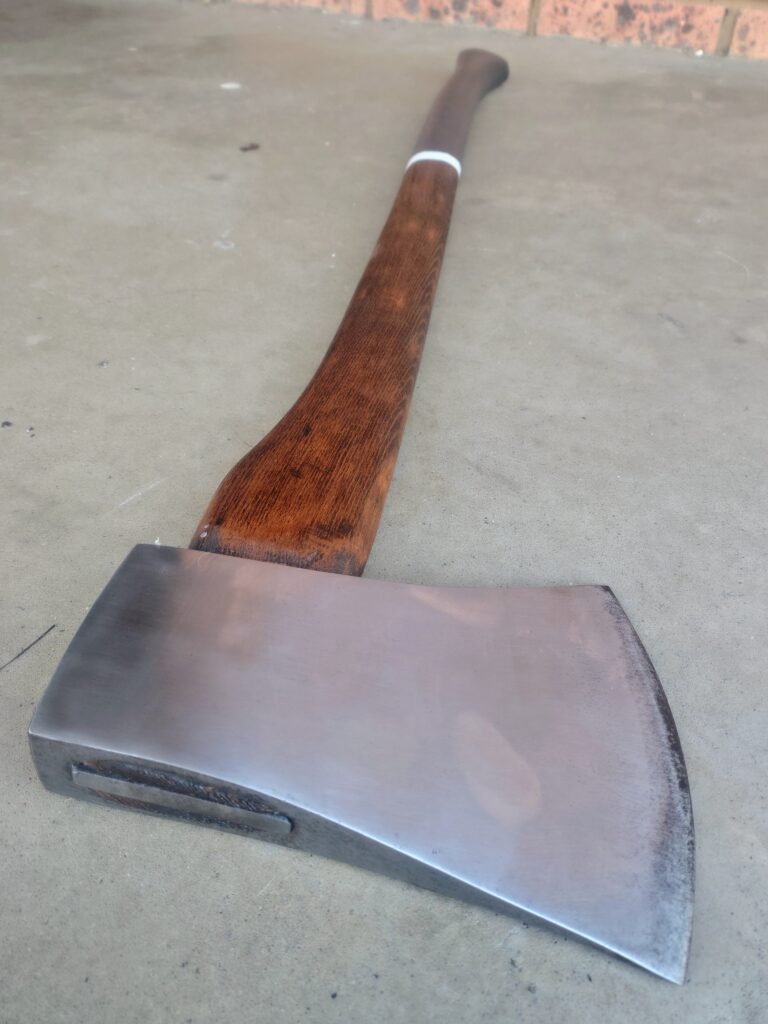
Workshop update coming soon.
The next stage will be taking the bit from 320 grit through to approximately 800 grit before establishing the final edge. Once sharpened, the handle will receive its final application of Forgotten Steel Workshop Wax and the axe will be ready for what it was designed to do.
Split timber.
Not sit on a wall.
Looking at it now, it’s hard to believe this axe spent more than thirty years waiting for someone to put it properly to work.
This article will be updated as the restoration progresses.
Restore it. Use it. Pass it on.