

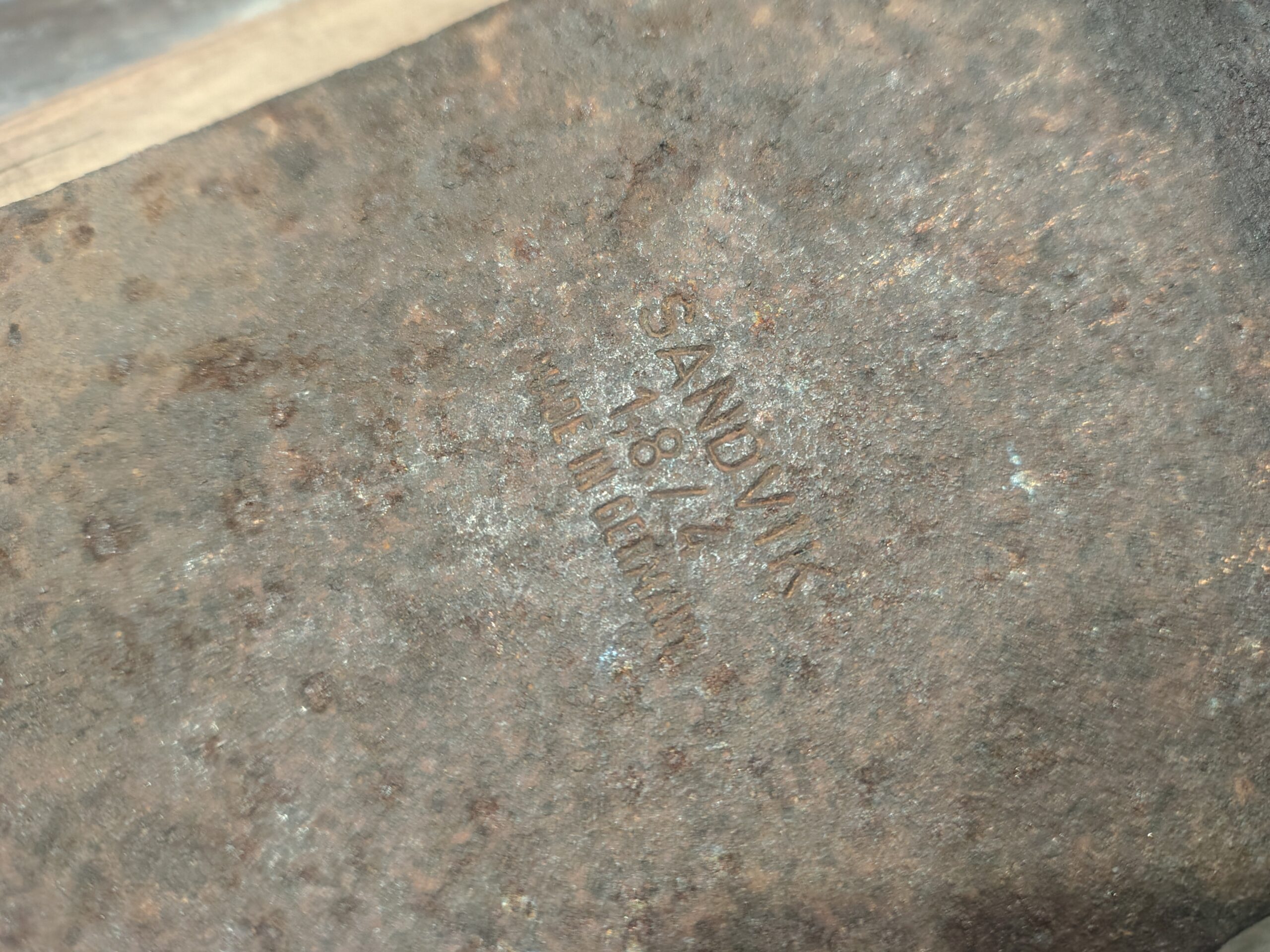
I went to look at a few axe heads. I left with an armful of handles, a handful of workshop tricks and a reminder of why the people are often the best part of the pick.
There is a strange thing that happens when you put the word out that you’re looking for old axes. At first, not much happens. A few people send through photographs of hardware-store hatchets that have spent six months behind the garden shed, someone offers you a block splitter they bought in 2007, and every now and then a bloke confidently tells you he has a very rare axe before sending through a photograph of something that still has a barcode on it.
Then, occasionally, you meet someone like Brett.
Brett first contacted me through Facebook after seeing a Marketplace post I’d put up looking to buy old axes and tools. He had a nice Elwell Tasmanian pattern axe and sent through a few photographs to see if I’d be interested. It was a good axe, but after a bit of back and forth I decided it wasn’t quite what I was chasing at the time. We left the conversation there, as you often do, and I assumed that would probably be the end of it.
About a month later, my phone lit up with another message from Brett. He had several more axe heads that he thought I might be interested in. A few photographs followed, and before long we’d organised a time for me to come around and have a look.
When I arrived, Brett was on the phone organising a bank transfer. I waited while he finished the call and soon discovered the transfer was for more axe heads he’d just bought. This was probably the first indication that I wasn’t dealing with a bloke who happened to have a couple of old axes lying around the shed.
Brett showed me into his workshop, where a collection of axe heads was already on display. Some had been restored, others were waiting their turn, and it quickly became obvious that this wasn’t going to be a five-minute visit involving a quick glance at a few axes and an awkward discussion about price.
“Now tell me,” Brett said. “What are you after one for? Is it to use, or to display?”
It was a fair question, and one that probably tells you quite a bit about an axe person. I explained what I was building with Forgotten Steel and told him that I restore old axes to be used. I also mentioned that I was looking for a few suitable heads for my son to work on beside me so he could start learning the restoration process without me nervously hovering over him while he attacked a rare Kelly with a wire wheel.
Brett reached into a bucket beneath the bench and pulled out two axe heads.
“Well, here you go. You can have these two for nothing. That’ll give him something to practise on.”
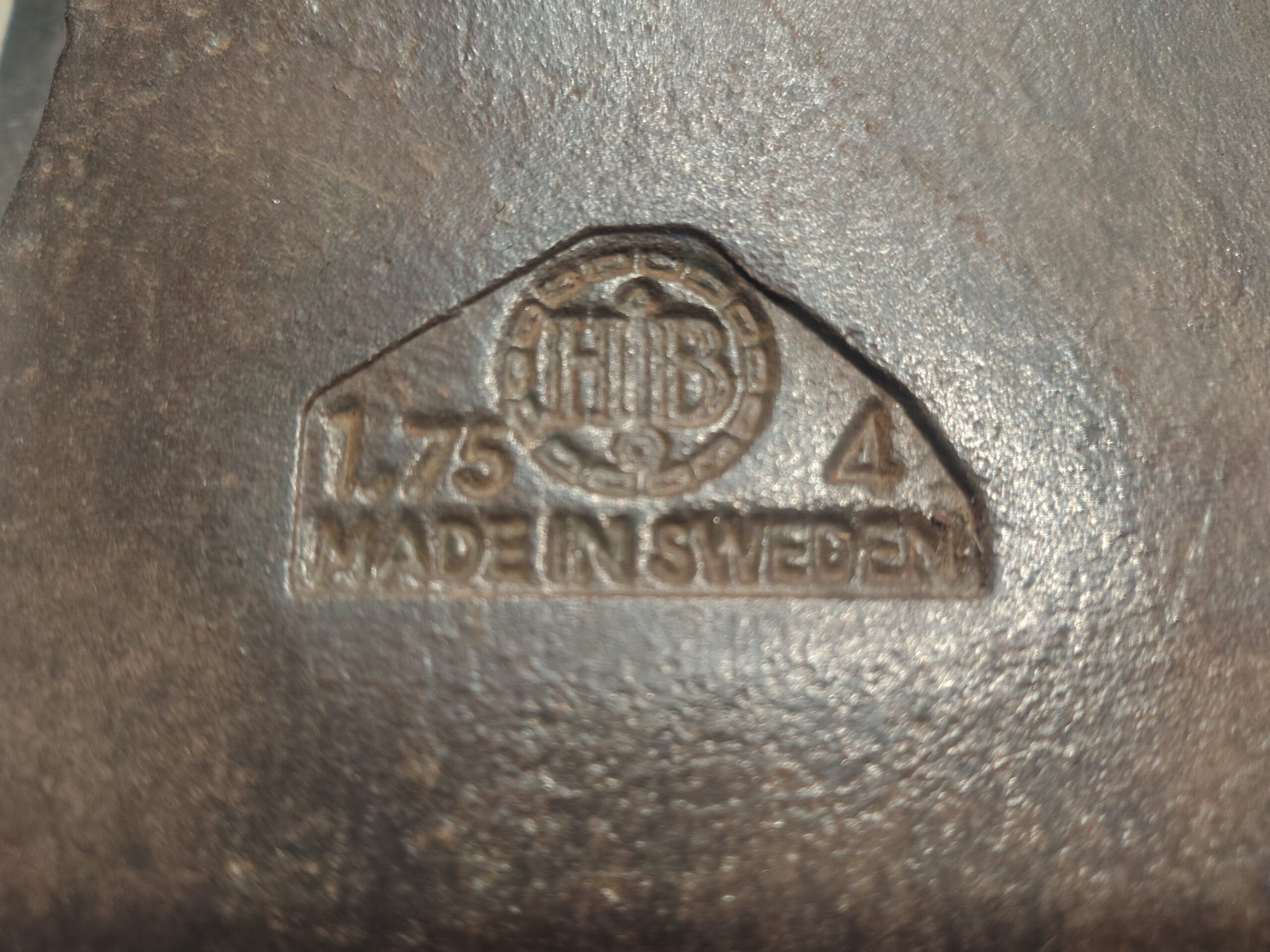
One was a small German-made Sandvik. Rusty, dirty and still carrying the remains of an old handle in the eye, it was exactly the sort of axe head I had been talking about. There was enough work in it to teach the process, but underneath the surface rust was still a genuine old axe worth bringing back into service. The other head would come home with me as well.
I thanked Brett, put the two heads aside and we kept talking.
That was when the visit changed from looking at axes to what I can only describe as an unplanned workshop lesson.
PICKING BRAINS AS WELL AS AXES
In one section of the workshop, Brett had an electrolysis tank set up with a Kelly Dandenong bubbling away inside it. Naturally, I wandered over for a closer look. There are certain things an axe restorer is physically incapable of ignoring, and a Kelly Dandenong slowly emerging from a bath of rusty water is fairly high on the list.
Brett talked me through his setup and explained why he preferred using a DC regulator rather than a battery charger. From there, the conversation moved into how he finished his axe heads. He showed me his method of gun bluing the steel and then pulled out a tin of wax he’d made for timber.
“Here, you better take a tin of that.”
At this point, it is worth remembering that I still hadn’t actually bought anything from him.
We kept talking.
Brett showed me some cotton flap discs he used during finishing and then produced another purple abrasive disc that he liked for getting a particular finish on the heads.
“You better take that with you as well.”
My pile was growing.
What had started as a visit to potentially buy an axe head was rapidly turning into the sort of situation where I was going to need to make two trips back to the car. I wasn’t complaining.
This is one of the things I enjoy most about old tool restoration. You can spend hours reading books, searching old catalogues and watching people work, but every restorer develops their own little methods along the way. A particular abrasive they like. A homemade wax recipe. A way of setting up an electrolysis tank. A finishing process they’ve refined after restoring dozens of heads.
Most of that information isn’t particularly secret. It simply lives in sheds.
You only find it by talking to people.
Brett had recently retired from the RV and caravan industry, although apparently retirement hadn’t lasted particularly long before they rang and asked if he’d come back to help. Anyone who has spent a lifetime becoming good at something will probably recognise that story. You finally escape, put your feet up, and someone remembers you’re the bloke who knows how everything works.
Eventually, we drifted back towards the axe heads I’d originally come to see. There were a few I liked, but I’d made several other purchases recently and was doing the responsible thing by pretending I had some degree of financial discipline.
I explained that I was juggling the finances around and wasn’t quite ready to make a decision.
“That’s alright,” Brett said. “I’ve got several more coming next week you might be interested in.”
Dangerous words.
Then he pointed me towards a selection of axe handles.
“I’ve got handles over here you can buy for them too.”
The handles were nicely shaped spotted gum, with far better lines than many of the thick, clumsy replacement handles you commonly see today. We talked timber and handles for a while before Brett pointed towards a large bundle of old handles that had been cut from axe heads during previous restorations.
“I burn those for firewood, but you can take them if you can make something with them.”
Naturally, I could make something with them.
Or, at the very least, I could take them home and place them in my workshop while I spent the next six months telling myself I was definitely going to make something with them.
Either way, they weren’t becoming firewood.
THE COLLECTION ON THE BACK WALL
By this stage we’d been talking for close to an hour. The original reason for my visit had almost become secondary, and somewhere along the way I’d accumulated two axe heads, a tin of homemade wax, an abrasive disc and an armful of old axe handles.
I still hadn’t bought an axe.
As we talked, Brett explained that his own buying and selling helped fund his personal collection. The plan was eventually to have axes spanning the back wall of the shed. Looking at the heads already on display and knowing he’d been transferring money for another batch when I arrived, I suspect the back wall may need to prepare itself.
But I understood exactly what he meant.
Most people who become interested in vintage tools eventually find an area that grabs them. It might be Australian axes, American makers, broad axes, racing axes, hand planes or old blacksmithing tools. You start with one because it’s interesting. Then you find another with a different stamp. Before long you’re discussing subtle variations in maker’s marks with strangers on the internet and explaining to your family why the seven axes leaning against the workshop wall are all completely different.
It’s a perfectly normal progression.
At least that’s what we tell ourselves.
For Brett, the collection was taking shape on that back wall. For me, Forgotten Steel has become something slightly different. I’m interested in the tools, certainly, but increasingly I’m interested in the stories and knowledge attached to them. Every time I meet another collector or restorer, I seem to leave knowing something I didn’t know when I arrived.
Sometimes it’s historical. Sometimes it’s technical. Occasionally it’s a simple workshop trick that makes you wonder why you’ve been doing something the hard way for the past five years.
Those little pieces of information accumulate.
That’s how these old skills survive.
MORE THAN A PICK
I eventually gathered everything Brett had given me and headed towards the car. Before leaving, I promised him I’d be back to look at the next batch of axe heads and, perhaps more importantly, pick his brains some more.
I meant it.
There are days when picking old tools is exactly what people imagine. You drive somewhere, look through a pile of rusty steel, haggle over a price and come home with something interesting for the workshop. I enjoy those days.
Then there are visits like this one.
I went to Brett’s place because he had some axe heads for sale. I left having learned more about electrolysis, seen another restorer’s finishing process, talked handles, timber, waxes and collections, and somehow ended up carrying half the contents of his workshop towards my car despite not buying the axes I’d originally come to inspect.
The little German Sandvik axe head Brett pulled from beneath the bench will soon find its way onto the Forgotten Steel workbench. It isn’t a rare trophy axe and it certainly didn’t arrive looking particularly glamorous. The old handle remains firmly wedged in the eye, the steel is covered in surface rust, and there is plenty to investigate before I decide exactly how far the restoration will go.
But now it has a story.
It came from a bloke I met because of a Facebook post about old axes. A bloke who invited me into his workshop, showed me how he does things and started handing me tools and supplies because he thought they might help.
That’s the part of picking old tools I don’t think photographs ever quite capture.
The steel is what gets you through the door.
The people are often why you remember the visit.
FROM THE FORGOTTEN STEEL ROAD
The more time I spend chasing old axes and tools, the more convinced I become that the best finds aren’t always the rarest ones. A valuable axe is exciting, and I certainly won’t pretend I’d walk past a rare Hytest because I was too busy looking for meaningful human connection. I’m not completely mad.
But the people you meet along the way become part of the story of the tool.
Years from now, I’ll be able to pick up that little Sandvik and remember exactly where it came from. I’ll remember the Kelly Dandenong bubbling away in Brett’s electrolysis tank, the axe heads lining the workshop and the growing pile of things he kept telling me to take home.
And I suspect this won’t be the last time I visit Brett’s shed.
After all, he has more axe heads coming.
And I did promise to pick his brains some more.
Restore it. Use it. Pass it on.